
.png)
Key Takeaways
- CPL marketing pays publishers for leads that meet an advertiser’s agreed requirements.
- A lead can be a quote request, an inquiry, an application, or another defined expression of interest.
- A submitted or tracked lead is not automatically approved or eligible for payment.
- Audience relevance, accurate information, permitted traffic, and clear user expectations support lead quality.
- Publishers should compare approved commission revenue with acquisition costs before increasing traffic.
What Is CPL Marketing?
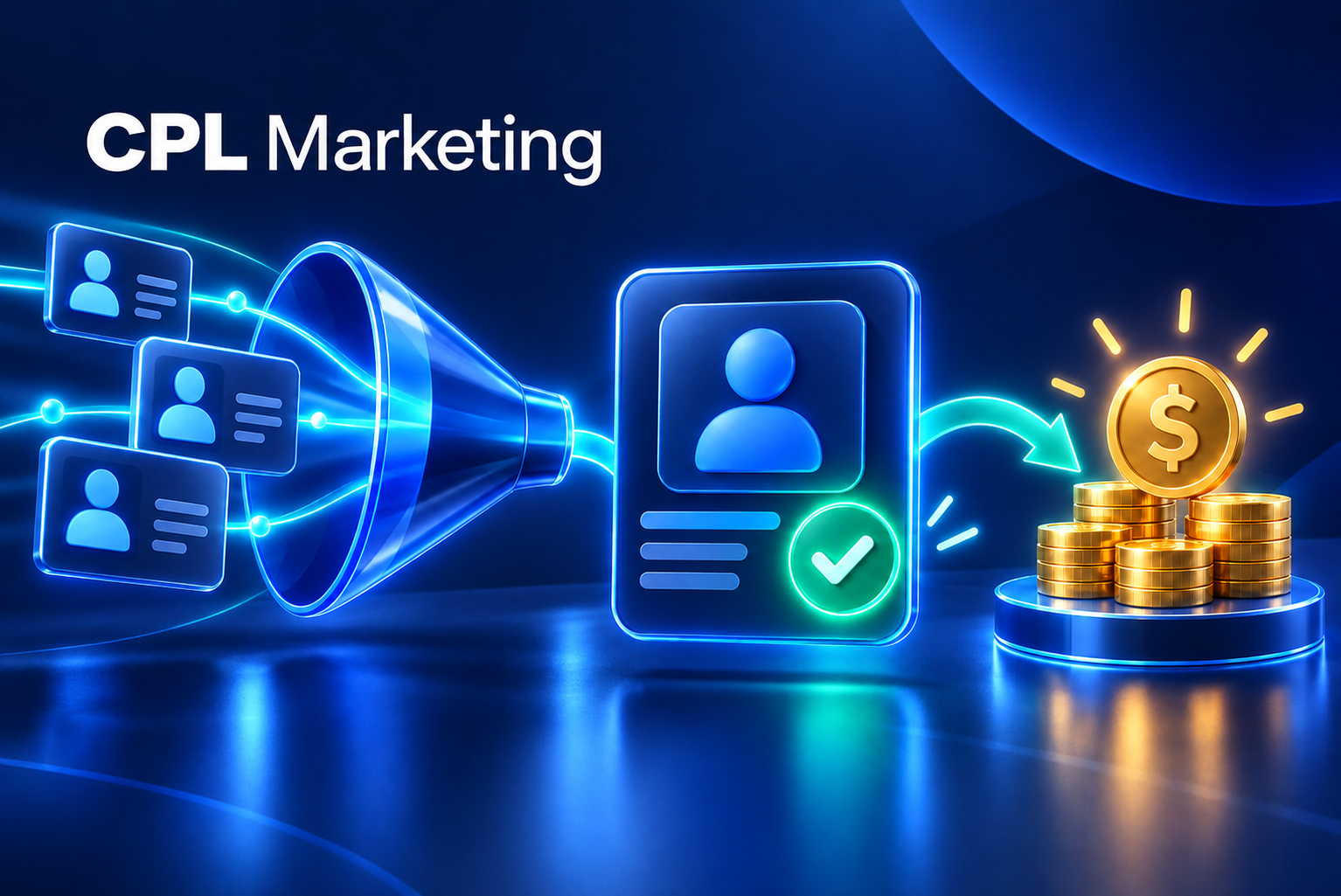
CPL stands for cost per lead. In affiliate marketing, it describes a commission model in which a publisher earns money for referring a lead that meets an advertiser’s campaign requirements.
A lead is a potential customer who expresses interest through a defined action. This might involve requesting an insurance quote, submitting a service inquiry, or completing an eligible application.
The advertiser determines what qualifies for payment. A campaign might require valid contact information, a specific location, a new prospect, or answers that meet its eligibility criteria.
For publishers, CPL describes the commission associated with a qualifying lead. For advertisers, it describes the cost of acquiring that lead.
At MaxPoint Media, we encourage publishers to begin with one question: What exactly makes this lead eligible for a commission?
Understanding that definition is essential before creating content, buying advertising, or estimating revenue.
How Does CPL Marketing Work?
A CPL campaign connects a relevant audience with an advertiser seeking potential customers. The process usually follows these steps.
1. Select an offer that fits your audience
Choose a product or service that matches your audience’s needs and eligibility. Location, interests, and the user’s stage in the buying journey can affect whether the offer is suitable.
2. Review the lead requirements
Confirm the payable event, required information, permitted traffic sources, promotional restrictions, attribution rules, caps, and payment terms.
3. Configure tracking
Use the campaign’s approved affiliate link or integration. Tracking connects referred activity with the publisher responsible for it.
4. Publish an accurate promotion
Create content or advertising that explains the offer and the next step. Users should understand whether they are requesting information, applying for a product, or asking to be contacted.
5. Generate leads and review their status
Submitted leads may appear as tracked or pending results. The advertiser or network then reviews them according to the agreed validation process.
6. Receive payment under the agreed terms
Approved lead commissions become eligible for payment according to the campaign’s payment schedule and applicable account requirements.
A form submission, an approved lead, and a paid commission represent different stages. Publishers should account for each stage when evaluating campaign performance.
What Types of Actions Can Qualify as CPL Leads?
CPL campaigns can use different lead events. The following examples illustrate possible requirements rather than universal payment rules.
| Lead event | Possible qualification requirements |
|---|---|
| Quote request | A completed request from an eligible user with valid contact details. |
| Service inquiry | A relevant inquiry within the advertiser’s service area. |
| Application submission | An application containing the required information and meeting defined eligibility criteria. |
| Consultation request | A genuine request that satisfies the campaign’s contact or appointment requirements. |
| Business inquiry | A prospect whose company, role, or business needs match the advertiser’s target profile. |
A consultation request does not necessarily require an attended appointment. An application does not necessarily require a completed purchase. The campaign must specify which event triggers payment.
CPL vs. CPA vs. CPS: What Is the Difference?
These labels describe different qualifying results. They help organize offers, but the campaign’s conversion definition remains the deciding factor.
| Model | Meaning | Typical qualifying result |
|---|---|---|
| CPL | Cost per lead | A lead that meets the advertiser’s requirements. |
| CPA | Cost per action or acquisition | A specified action, such as a verified registration or customer acquisition. |
| CPS | Cost per sale | An eligible purchase that satisfies the campaign’s validation rules. |
CPA is sometimes used as a broad category that includes lead and sale campaigns. As a result, an offer described as CPA may still pay for an approved lead.
Read the payable event and payout conditions together. A campaign name alone does not tell you whether a submission, verification, appointment, or purchase is required.
Does CPL Marketing Require a Purchase?
Usually, a CPL commission is tied to a qualifying lead rather than a completed sale. The advertiser may follow up with that prospect and attempt to turn the inquiry into a customer.
However, the absence of a purchase requirement does not make every submission payable. The lead may still need to pass contact verification, eligibility checks, duplicate screening, or other agreed reviews.
If a campaign pays only after a later event, such as an attended appointment or completed transaction, publishers should confirm that condition explicitly. The entire qualifying journey matters when assessing how difficult a conversion will be.
What Makes a Lead Qualified?
A qualified lead satisfies the criteria defined for the campaign. Those criteria can vary between advertisers and offers.
- Eligibility: The user meets the required location, age, service-area, or other campaign conditions.
- Information quality: Required details are complete and accurate.
- Genuine interest: The user understands the offer and intentionally requests the relevant information or service.
- Uniqueness: The lead meets the campaign’s rules for duplicate submissions or existing customers.
- Permitted promotion: The lead comes from an approved traffic source and promotional method.
- Required permissions: The lead journey captures any disclosures and permissions required for that campaign.
A person can be interested in a product and still fail a campaign’s eligibility rules. Equally, valid contact information alone may not establish that the person requested the service being promoted.
Qualification should be assessed against documented campaign terms. Publishers should confirm the review criteria and dispute process before launch.
How Are Lead-Based Commissions Calculated?
For a fixed-payout CPL offer, the basic calculation is:
Approved commission revenue = Approved leads × Payout per approved lead
Consider this illustrative campaign, assuming all tracked leads have been reviewed.
| Metric | Example |
|---|---|
| Payout per approved lead | $15 |
| Tracked leads | 100 |
| Approved leads | 80 |
| Rejected leads | 20 |
| Approval rate | 80% |
| Approved commission revenue | $1,200 |
| Advertising spend | $800 |
| Commission revenue minus advertising spend | $400 |
The remaining $400 is before content costs, tools, taxes, and other expenses or adjustments. It is not final net profit.
Calculating revenue from all 100 tracked leads would suggest $1,500. However, only 80 leads qualified for commissions in this example.
Publishers should also calculate:
Cost per approved lead = Advertising spend ÷ Approved leads
Here, the cost per approved lead is $10. Comparing that figure with the $15 payout gives a clearer view of campaign economics than looking at submission volume alone.
Some campaigns use tiered or variable payouts. Apply the agreed rate to each approved lead rather than assuming every result earns the same amount.
Publisher Payout vs. Advertiser Cost per Lead
The publisher’s CPL payout and the advertiser’s total acquisition cost are related, but they may differ.
A publisher evaluates the commission earned for each approved lead against the cost of generating it. An advertiser evaluates what it spends to acquire leads and whether those leads produce useful business outcomes.
When a network is involved, the advertiser’s agreed rate and the publisher’s payout may be different. Additional campaign or service costs can also affect the advertiser’s total cost.
Reports should clearly identify which amount they show. A low submission cost does not necessarily mean a low cost per qualified prospect or acquired customer.
Which Traffic Sources Can Publishers Use?
The appropriate channel depends on audience intent and the campaign’s permitted traffic sources.
Content websites and search traffic
Educational articles, comparison pages, and service guides can reach users researching a problem or evaluating options. Content should explain the offer accurately and help users decide whether it fits their needs.
Paid search and social advertising
Approved advertising can generate relevant inquiries, but publishers need to account for acquisition costs and creative restrictions. Confirm any limits on brand bidding, targeting, and landing pages before spending.
Social media content
Posts and videos can introduce an offer to an interested audience. The message should make the next step clear and avoid promises that the advertiser cannot support.
Email may be permitted when the audience and promotional approach meet campaign requirements. Confirm any content approval, disclosure, and subscriber-permission requirements.
Incentive traffic
Rewards for completing a form can affect lead intent. Use incentives only when the campaign explicitly permits them and follow the stated conditions.
Permission to use a channel must be confirmed for each offer. Acceptance by one campaign does not automatically apply to another.
How to Choose a CPL Offer
At MaxPoint Media, we recommend considering the audience, lead requirements, and expected economics together.
Audience fit
Does the offer address a need your users already have? Can they qualify based on location and other eligibility conditions?
Lead journey
Review the entire process, including required fields and verification steps. A short inquiry form and a detailed application require different levels of commitment.
Validation rules
Understand the approval criteria, review timeframe, rejection reasons, and process for questioning a decision.
Payout and payment terms
Confirm the rate, any variable pricing, payment schedule, minimum threshold, and other conditions affecting when commissions become payable.
Traffic restrictions and caps
Check whether your promotional method is accepted and whether daily or monthly limits apply.
A higher payout may come with stricter eligibility or a more demanding user journey. Compare the complete opportunity before choosing an offer.
What Should You Check Before Launching?
- Campaign access: Has your participation been approved?
- Payable event: What exact lead action earns a commission?
- Target audience: Which users and locations are eligible?
- Traffic source: Is your channel and promotional method permitted?
- Creative review: Do advertisements or landing pages require approval?
- User expectations: Does the promotion explain what happens after submission?
- Data handling: Are required disclosures and permissions covered in the approved journey?
- Tracking: Does the approved link or integration record the correct event?
- Duplicates: How are repeat inquiries and existing customers treated?
- Caps: What happens when the campaign limit is reached?
- Validation and payment: When are leads reviewed and approved commissions payable?
Use the campaign’s approved testing process to check tracking. Avoid submitting invented customer information to create test leads unless an authorized testing procedure specifically provides for it.
How to Measure CPL Campaign Performance
Start with clicks and tracked leads to understand how much referred traffic reaches the offer and completes the recorded event. These figures describe activity, but they do not establish payable revenue.
Review approved leads and rejected leads to assess qualification. Calculate approval rate as approved leads divided by reviewed leads, using a clearly defined reporting period. Keep pending leads separate so incomplete validation does not distort comparisons.
Compare approved commission revenue with acquisition costs. Calculate cost per approved lead and identify whether the remaining revenue can cover other campaign expenses.
Where feedback is available, review contactability and downstream outcomes such as appointments or sales. These measures can help explain advertiser satisfaction even when the publisher’s commission is based on an earlier lead event.
Break results down by traffic source, advertisement, placement, or landing page. Compare groups after similar validation timeframes, and account for leads submitted in one period but approved in another.
Common CPL Marketing Mistakes to Avoid
Choosing offers only by payout
A high rate has limited value when your audience cannot qualify or acquisition costs are too high.
Treating every submission as revenue
Pending leads may be rejected. Base revenue estimates on clearly defined conversion statuses.
Creating misleading expectations
Do not present a quote request as a guaranteed offer or imply that submitting an application guarantees approval.
Using prohibited traffic or incentives
Lead volume does not override campaign restrictions. Confirm permission before launching a new method.
Scaling before validation
Early submissions can appear promising while approval results remain unknown. Increase traffic based on reviewed performance.
Ignoring rejection patterns
Repeated ineligible or duplicate leads may indicate a targeting, messaging, or user-journey problem. Review documented reasons and request clarification where needed.
Overlooking cash flow
Advertising expenses may be due before commissions are paid. Allow for validation and payment timing when setting your budget.
Frequently Asked Questions
Can beginners start CPL marketing?
- Yes. Acceptance depends on the advertiser or network. Beginners should have a clear audience, a permitted promotional method, and an understanding of the offer’s lead requirements.
Do I need a website?
- Not always. Some campaigns accept social media, email, or paid advertising publishers. Confirm the specific traffic properties and methods accepted by the program.
Does every submitted lead earn a commission?
- No. A submission must satisfy the campaign’s qualification, attribution, and validation rules before it earns an approved commission.
Why might a lead be rejected?
- Possible reasons include duplicate submissions, incomplete or invalid information, ineligible users, prohibited traffic, or failure to complete the required event. Applicable reasons depend on the campaign terms.
Is a CPL lead required to become a customer?
- Not necessarily. Many CPL campaigns pay for an eligible lead before a sale. If a later outcome is required for payment, that condition should be stated in the campaign terms.
How much can I earn with CPL marketing?
- There is no fixed income level. Results depend on traffic volume, audience fit, approval rates, payout, acquisition costs, and campaign limits.
When are CPL commissions paid?
- Payment follows the agreed terms. Validation timing, payment schedules, minimum thresholds, and account requirements can affect when approved commissions become payable.
Build Better Lead-Based Campaigns With MaxPoint Media
CPL marketing allows publishers to earn commissions by connecting relevant audiences with advertisers seeking potential customers.
The foundation is straightforward: understand what qualifies as a lead, promote the offer accurately, test tracking, and evaluate approved results alongside acquisition costs.
MaxPoint Media shares affiliate marketing knowledge to help publishers and advertisers understand campaign requirements and build effective partnerships.
Ready to explore lead-based offers? Connect with MaxPoint Media to discuss opportunities suited to your audience, traffic sources, and target markets.